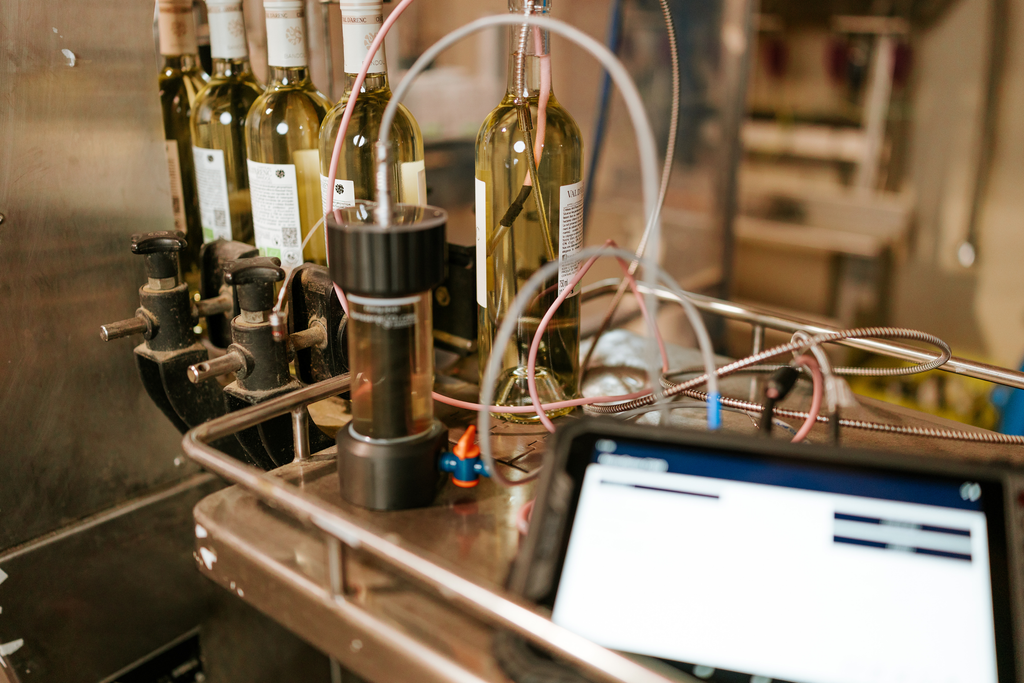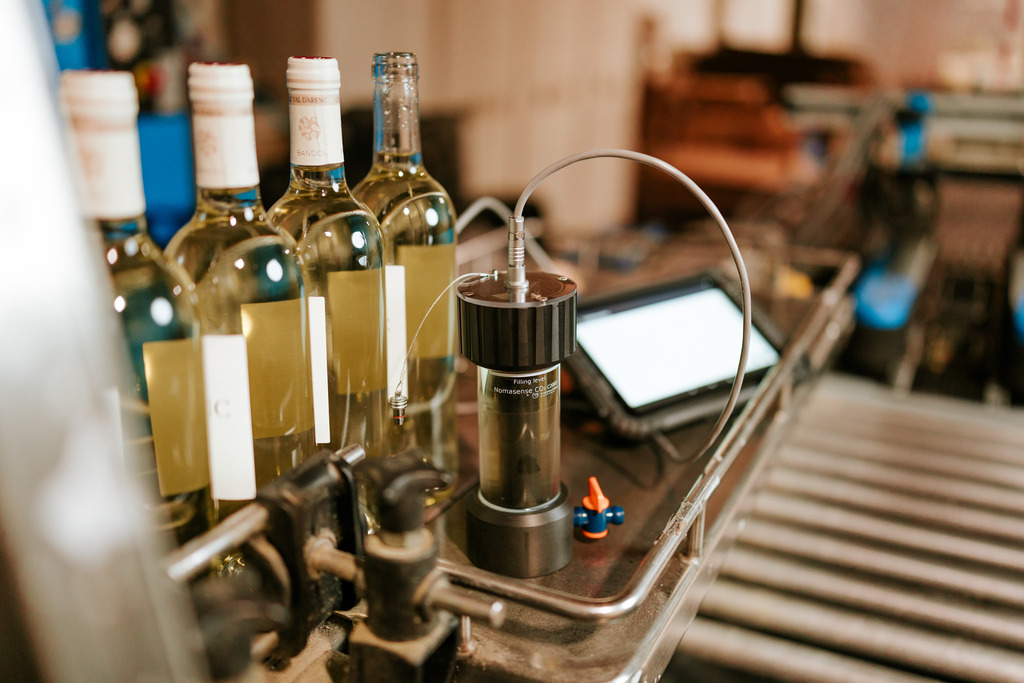
O₂: low, consistent TPO
The key indicator is TPO (Total Package Oxygen): dissolved oxygen plus headspace oxygen. The headspace accounts on average for about half of it. Targets to aim for: below 2 mg/L for conventional wines, below 1 mg/L for low- or no-sulfite wines. Consistency matters as much as the level: it is what ensures uniformity within a lot. According to the Nomasense O₂ database, only half of bottles with cylindrical closures reach a TPO below 2 mg/L.
CO₂: adjust, then preserve
In still wines, dissolved CO₂ enhances freshness and acidity, softens the perception of sweetness and, in red wines, heightens bitterness and astringency. A 200 mg/L difference can be enough to change a wine’s profile. The target content, generally between 300 and 1,500 mg/L, is adjusted before bottling and must then be maintained all the way to the bottle. To achieve this, inerting must use a gas mix containing CO₂: nitrogen alone protects against oxygen but strips out part of the dissolved CO₂.
The same critical points
- Start and end of the run: peaks in oxygen pickup and CO₂ loss.
- Lines and buffer tank: inerting to check before filling.
- Filling valves: variation from one valve to the next.
- Headspace and closure: the last line of defense for storage.
Putting procedures in place is not enough: only measurement, at the same point and at the right time, confirms that they work.
Measuring O₂ and CO₂ at the same point confirms that your practices protect the wine from oxidation without stripping its freshness.

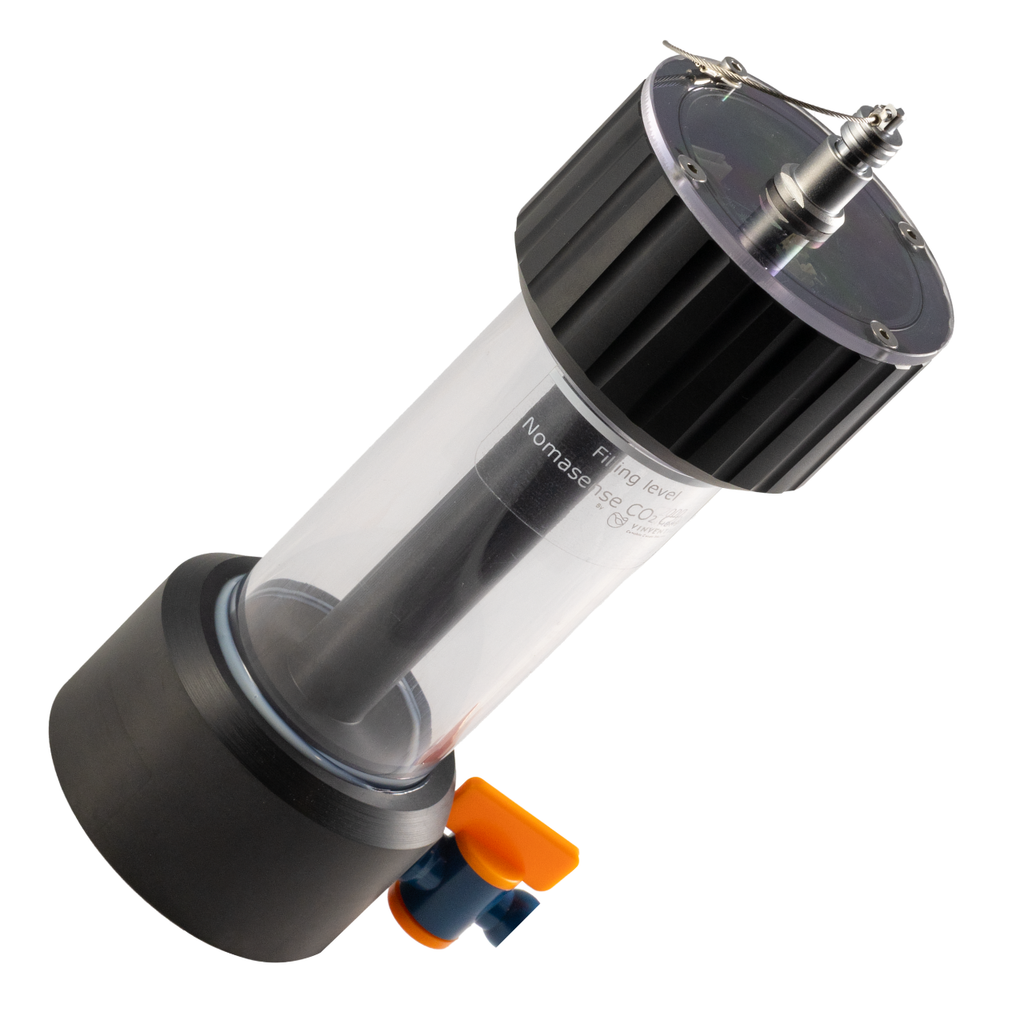
Nomasense CO2
Measure dissolved CO₂ in the cellar, to ±50 mg/L, in under a minute.View productView product